Category Archives: Captains & Legends 传奇

Justice League 公义联盟

William Lye, OAM

Barrister of Law

By Billie Ooi-Ng Lean Gaik

William Lye

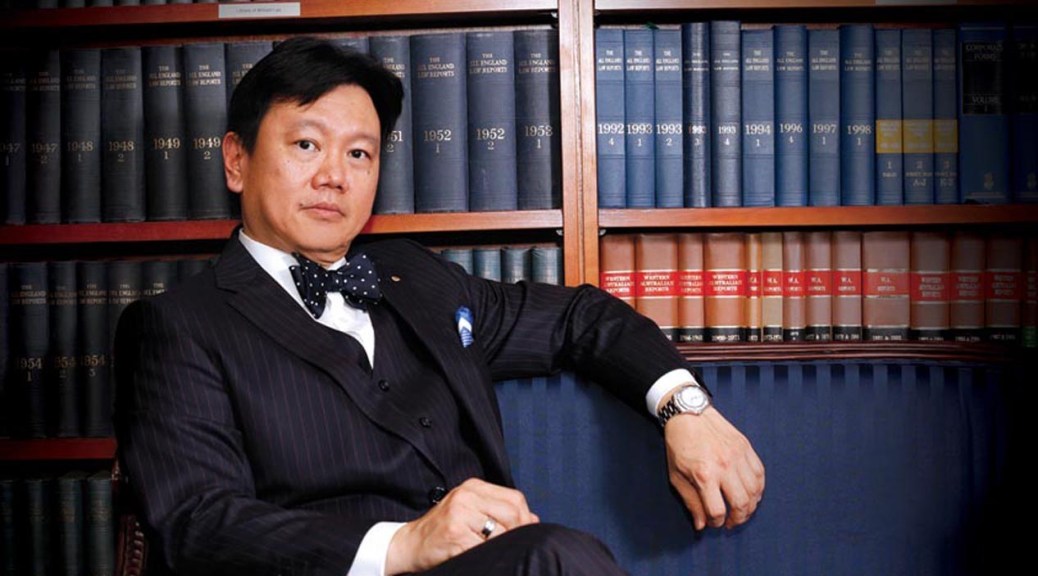
Striding in a well-cut suit, and a Turnbull & Asser bow tie, William Lye, barrister at law, cuts an impressive figure in Her Majesty’s court rooms as well as the book-lined corridors of his chambers in the Melbourne CBD.

Not just there for aesthetics, he holds a Master of Laws, (specialising in Intellectual Property), and a Master of Entrepreneurship and Innovation from the Australian Graduate School of Entrepreneurship, amidst an impressive list of achievements and accolades. The cherry on the cake was the 2017 Australian Law Awards, where Lye took home the Barrister of the Year and Lawyers Weekly Excellence awards. “I was truly overwhelmed by the acknowledgement from my peers.”

Born and schooled in Malaysia, Lye has always defied staggering odds. Afflicted with bronchitis and asthma as a teenager, he managed to excel in sports and played softball for the state and national team. At 16, he nearly lost his life in surgery due to an allergic reaction to general anaesthetic. “As that defining moment dawned upon me I started thinking seriously about my life. I’ve always had a sense of justice. Right wrongs. Law seemed logical.”

In 1982, he arrived in Melbourne to study Computer Science and Law at Monash University. “I held three jobs while studying – cleaning houses and industrial properties, worked in a restaurant as an assistant chef and did gardening jobs. I’d work in the factories or farms during summer.”

“My pet peeves are hypocrisy and mediocrity. I hate maintenance mode and always say buck the trend and think outside the box.”

When Lye graduated, no jobs were available. “It was extremely difficult for Asian migrants. For me the hardest thing was to feel accepted.  Even though there wasn’t any conscious effort to put you down, you’d feel like you’re never good enough, no matter how hard you tried.  I joined the Leo Cussen Institute for practical legal training and met two inspiring barristers Max Perry, Max Cashmore and later, my mentor and close friend Simon Wilson, who really defined the legal process for me.”

Lye started his legal career at the office of public prosecution. “That helped me gain confidence in dealing with matters of the crown.  There were no Chinese barristers around then. I never felt racism but received many funny looks.  When I walked the corridors, people didn’t think that I was a barrister.”

Nearly 30 years of practicing and lecturing the law, gave Lye many significant milestones. He was instrumental in setting up the Asia Practice section, Commercial Bar Association of Victoria in 2008.  Championing diversity at the bar, he founded the Asian Australian Lawyers Association in 2013.

On Australia Day this year, Lye was awarded the Order of Australia Medal for services to the law, business, and the promotion of cultural diversity. “One of my proudest moments, this is an important and humbling recognition to me.”

This Australian Day ambassador for Victoria devotes his time to numerous charitable causes when he is not indulging in personal pursuits like the Argentine Stroll and Iaido, a Japanese martial art of drawing the sword and responding to a sudden attack.

一套剪裁考究西装上系着 Turnbull & Asser 的领结-黎尤铭(WilliamLye) 这位出庭律师无论是在法院审讯室或在他墨尔本中央商务区走廊堆满书籍的房间内,都令人留下深刻印象。

而不仅具备审美学触感,他还拥有一个法律硕士学位,专攻知识产权,并获得澳大利亚创业研究院的创业精神和创新硕士学位。在一系列的成就和荣誉中,最让人瞩目的顶点是他在2017年澳大利亚法律大奖上荣获年度律师和律师周卓越奖。“我是真的被来自同僚的认可声笼罩了。”

马来西亚出生与受教育的黎尤铭总是在艰难时期选择逆流而上。青少年时,他患有支气管炎和哮喘,但在运动项目中表现出色,并代表州属和国家出征打垒球。16岁时,由于对全身麻醉的过敏反应,他差点在外科手术中丧命。“当面临这个决定性时刻,我开始认真思考自己的生活。我一直都怀有正义思维,正确与错误,而法律合乎逻辑。”

1982年,他来到墨尔本,在莫纳什大学就读电脑科学和法律。“我当时打了3份工—房屋和商业楼清洁工,餐馆厨师助手和园艺工作。而夏天会在工厂或农场工作。”

直至毕业他也没有获得工作机会。“对亚洲移民者来说,就业是极其困难的。对我来说,最艰难的就是接受的心情。那时莫名的失落沮丧,觉得自己永远不够好,不管怎么努力。接着我参与了 Leo Cussen 的实践法律培训,并遇到了2位鼓舞人心的律师Max Perr与Max Cashmore。还有后来,我的导师和密友Simon Wilson,是他为我真正定义了法律进程。”

我无法忍受虚伪和平庸。对于一成不变模式感到烦躁,总是逆势跳出框框思考。”

黎尤铭在公诉机关开始了他的律政生涯。“这协助我获得处理法律事务的信心。那时还没有华人律师。我从未感受过任何种族主义,但却领略到许多有趣的眼光。当我走在回廊的时候,人们并不认为我是一名律师。”

近30年的实践和训诫,让他累积了许多宝贵的里程碑。2008年,他在维多利亚商业律师协会推动亚洲实践区(Asia Practice section) 时发挥重大作用。他在律师协会倡导多元化,并在 2013 年创立了澳大利亚亚洲律师协会 (Asian Australian Lawyers Association)。

今年的澳大利亚国庆日,黎尤铭被授予了促进澳大利亚法律、商业和多元文化的服务勋章。“这是最自豪的时刻之一,这对我来说是一个关键性和谦虚的认可。”

这名维多利亚大使热衷参与许多公益慈善活动,而业余爱好包括社交舞和居合道 (这是日本剑道的一派,可以瞬间迅速应对和拔刀格杀)。
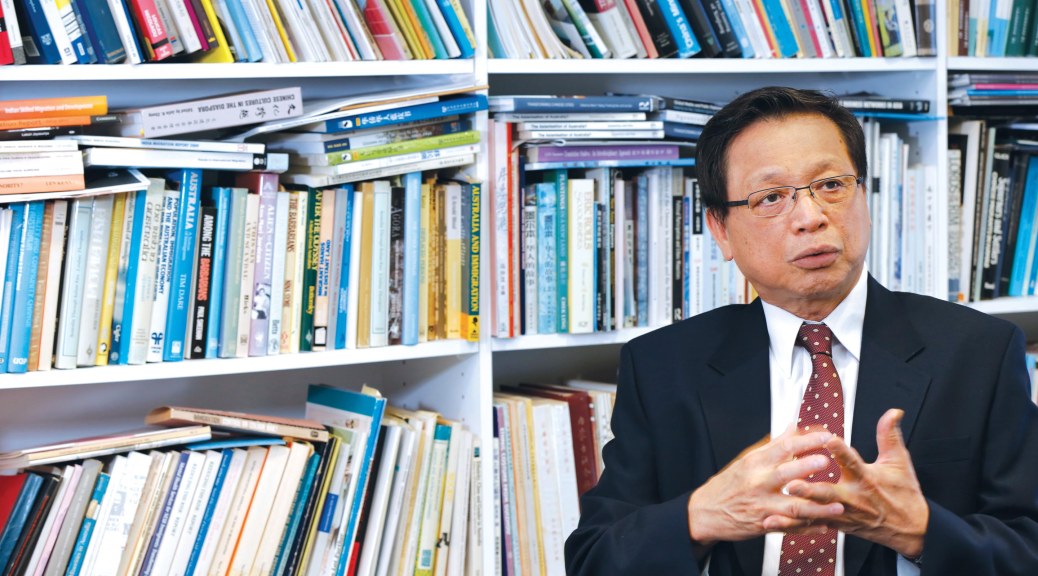
The Success Story of The Australian-Asian Relationship 澳大利亚与亚洲的双向羁绊

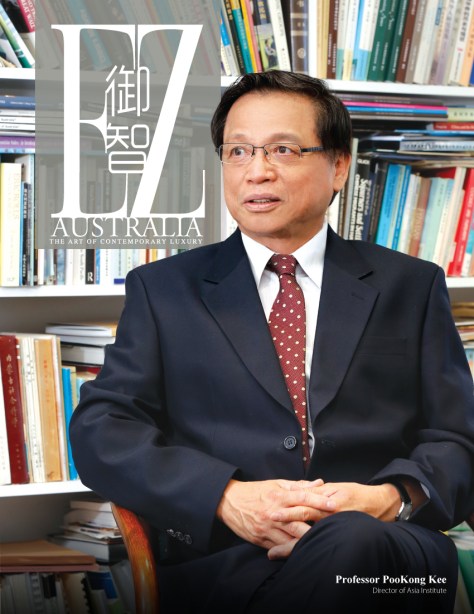
Professor PooKong Kee

Director of Asia Institute

By Karina Foo

Prof PooKong Kee

Australia faces a steady growing population of Asians and it seems to have welcomed this culture as part of its own. In Melbourne’s CBD, you’ll observe that almost half of the people are Asians – most are university students or young working adults residing in the city.

Director of Asia Institute, Professor PooKong Kee has observed this in his years of research in studying the population migration starting from the early years of Australia’s growing cultural diversity.

“There are around 12-13% of Asian Immigrants in Australia now. If you include Asian born Australians, the total population percentage of Asians in the country is 20% – and growing. In ratio, there are more Asians here than in the US or Canada,” he said.

This research is close to his heart as Kee, a prominent researcher, is also an Asian migrant born in Johore and spent his university years and most of his career in Australia including Adelaide and Canberra.

His recent teachings and research interests include the causes, processes and consequences of the global movement of people, Asian Diasporas, and Asian-Pacific affairs generally.

“You cannot have a thriving culture if you reject Asia as you will not cultivate that relationship that is so important for the growth of your country.”

One of his more recent research has sparked the interest of many, including property investor and mogul, Jason Yeap who helped to fund part of Kee’s study.

“We wanted to look at the first, second and third generation Australians as well as new migrants. The main purpose is to find out if this population sector are adequately represented in the society. Yeap’s personal interest is studying this population within the public sector which includes public services, educational institutions and hospitals,” explained Kee.

The issue

Kee made a major discovery in his research showing that Asians might not be well represented in certain areas.

“For example, the bulk of students in most universities doing medical courses are Asians, but you don’t see many Asians occupying top positions in Australian hospitals,” he said.

This has unfolded plenty of questions on his part and continues to find the answer to this big discrepancy between the number of top Asian students and top positions in the health and medical industry.

When asked if this could be the result of racism, Kee said it was possible, but emphasised that today’s racism is targeted mostly towards the Muslim community.

“This may be due to mainstream media and the news we’re exposed to on social media. For Australia, the 1970’s saw the first arrival of the “boat people”. A very highly regarded and prominent historian from the University of Melbourne sparked a series of negative comments on whether Australia was able to accommodate these new arrivals.

“This started years of long and heated discussions about the potential problems of Asian migration and that opened up the context for politicians like Pauline Hanson to get on board to side with such an issue,” said Kee.

But over time, he also remarked that Asians in particularly the Chinese, are perceived as an influential group.

Anglo to Asian

South East Asians and the Chinese have used Australia as an education and tourist destination over 30 years ago and continues on today. While the Anglo Australian still remains in power, things are slowly changing. Despite Anglo Australians still holding top positions in the medical field, there are many Asians who are also working their way to the top as assistants, nurses and doctors.

Kee pointed out that this gradual shift has also been observed in other industries like law, accountancy and finance. Three decades ago, Australia was a country that was a true reflection of the Northern European Anglo countries, but these days, it has become more of a multicultural diverse hub – leaning more towards the exposure of Asian communities.

Former Prime Minister John Howard was the first major politician who started a close relationship with China and that got the ball rolling for Australia – Asian relations.

“It may hold true that Asians coming into Australia does raise the bar in terms of education and scores as many Asian families send their children for extra tuition (coaching) and attaining higher marks than their peers as a result.

Many Australians realise that the future of the country does rely heavily on Asia and Asians. You cannot have a thriving culture if you reject Asia as you will not cultivate that relationship that is so important for the growth of your country,” said Kee.

This is a positive sign that Australia has come to accept the influx of Asian migrants and as the years go by, there will only be more progress of collaboration and acceptance.


随着澳大利亚日与俱增的亚洲人口,这也似乎成为当地文化的特色部分。而在墨尔本的中心商务区(CBD),你会发现几乎有一半是亚洲脸孔-大多数是居住城市里的大学生或年轻就业群体。

亚洲研究院院长纪宝坤教授表示,根据他长年进行的人口迁移研究显示,这一切是从该国多年来日益增长的多样文化开始。

目前,澳大利亚的亚洲移民比例占了12-13%。如果还要计算亚洲出生的澳大利亚人,那么就是占了总人口的20%,且数据一直上升中。这与美国或加拿大的亚洲人口相比显然更庞大。

作为著名研究员,同时也是亚洲移民,纪宝坤一直保持着对于此项研究的关注度。他出生在马来西亚柔佛州,却在澳大利亚阿德莱德和堪培拉先后度过本身的大学时光和工作就业。

他最近的教学和探索焦点包括全球人口流动的原因、过程和后果,还有亚洲移民和亚太事务。

“如果你拒绝亚洲,不可能拥有蓬勃的多元文化,也会错失培养对于国家发展来说非常重要的关系。”

而他近期的一项研究也引起许多人的关注,其中房地产大亨与慈善家叶绍礼(Jason Yeap)资助了部分研究经费。

“我们想观察第一、第二代和第三代澳大利亚亚裔及新移民的生活就业轨迹。而主要目的是聚焦上述群体在社会中是否有充分的代表性。叶绍礼个人对于目标群体在政府公共部门,包括公共服务,教育机构和医院里的生存状态较为关注。”

心脏的课题
另外,纪宝坤在研究中发现,亚洲人在某些领域未能获得良好发挥。“例如,大学内的医学系大多数都是亚洲学生,但在澳大利亚的医院和医疗体系,亚洲人却没办法占据重要位置。”

这个发现也令他对此展开更详尽持续的研究观察,尤其在亚洲顶尖学生的数量和医疗行业最高职位之间的巨大差异中寻求答案。

他并不排除是种族主义元素所造成的局面,但认为现今的种族主义主要针对穆斯林社区。

这一切都是因为主流媒体和社交网络上曝光的新闻所导向。对澳大利亚来说,上世纪70年代是“船民(新移民)”首次出现。而来自墨尔本大学,一名受人尊敬和杰出的历史学家也曾对澳大利亚是否能够适应这些新移民提出了一系列负面评论。

“这也开启了民众对亚洲移民潜在问题进行长达数年的激烈讨论,也为如Pauline Hanson一般的政治家们提供参合到这课题上的机会。”

他认为,但随着时间的推移,亚洲人尤其是华人,已被视为一个具备影响力的群体。

英国到亚洲
30多年前,东南亚人和华人把澳大利亚作为教育和旅游目的地,至今仍在持续。

纪宝坤说,尽管英裔澳大利亚人仍在掌权,但情况逐渐转变。即使前者仍然占据着医疗领域的最高职位,但也有许多亚洲人正以助手、护士和医生的身份在贡献。

“这种渐变模式相继出现在法律、会计和金融等其他行业。”

澳大利亚在30年前是北欧英裔国家模式写照,但如今,它已摇身一变成为多元化中心,并且显然更倾向于亚洲社区。

前首相John Howard是第一个与中国建立密切关系的关键政治家,他也为澳大利亚和亚洲之间的关系搭建了桥梁。

“亚洲人来到澳大利亚确实提高了当地教育和成绩水平,而且许多亚洲家庭都把孩子送到额外辅导班,也让他们的成绩比同龄人高出一截。”

“许多澳大利亚人也意识到,这个国家的未来很大程度上倚重于亚洲和亚洲人。如果你拒绝亚洲,不可能拥有蓬勃的多元文化,也会错失培养对于国家发展非常重要的关系。”

这是一个积极的迹象,表明澳大利亚已经接受亚洲移民的涌入,随着时间不断磨合,将会使合作和接受进程更顺遂。

Hall of Frames 画框之堂

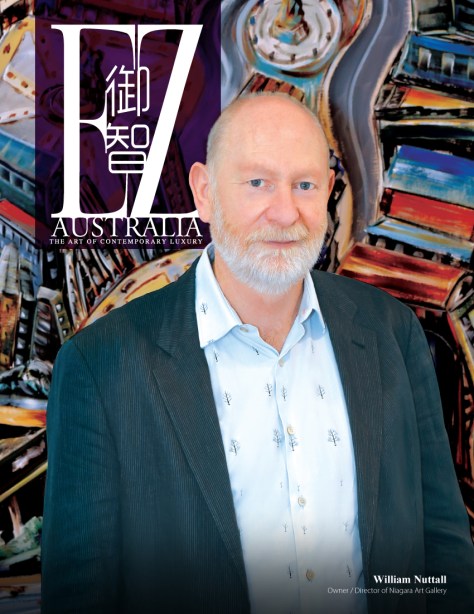
William Nuttall 

Owner and Director of Niagara Art Gallery


EZOZ10-7.jpg“If you collect contemporary art, you are supporting the art and the artist. Artists are lateral thinkers of our community and culture. Everybody should collect art”
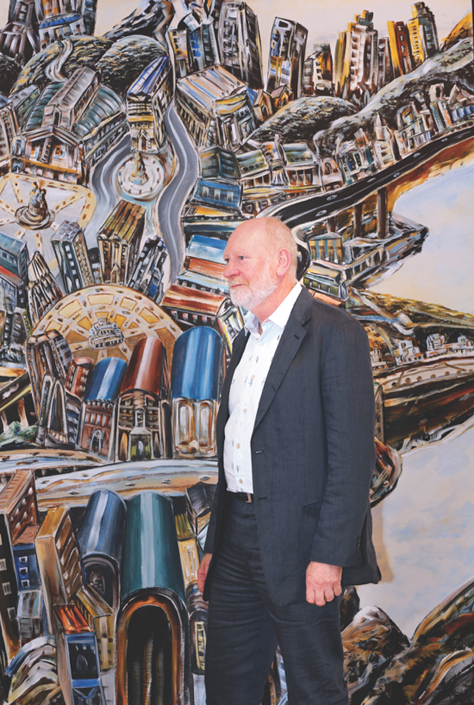
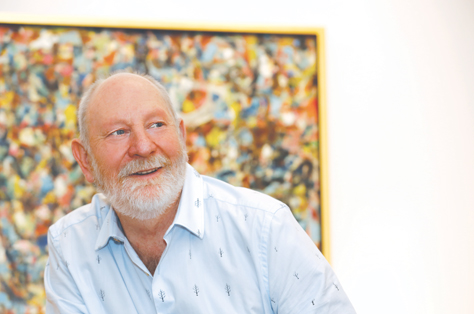
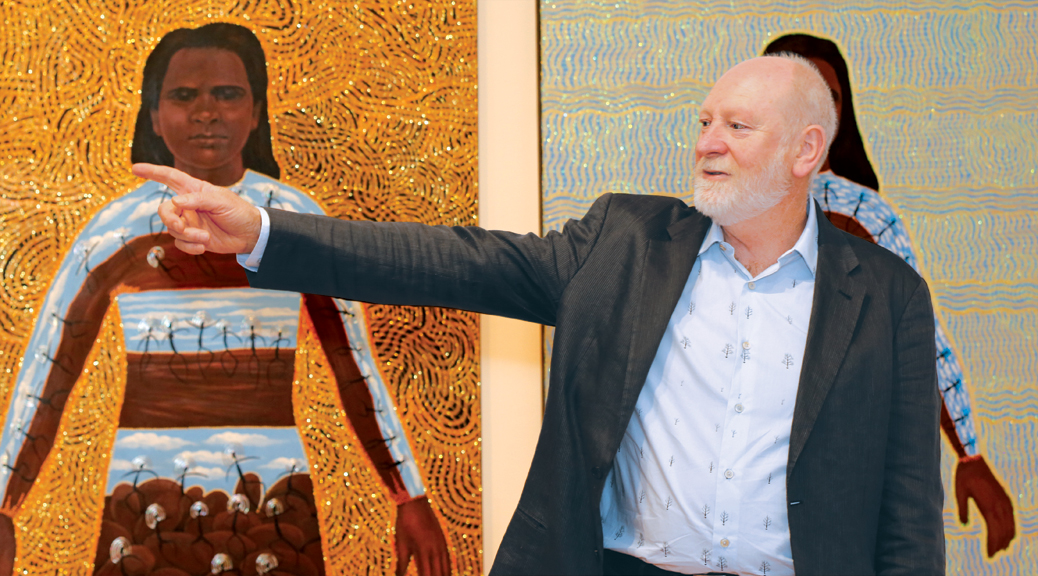
Niagara Art Gallery sets itself apart from its contemporaries, not because of its bold and flamboyant building at 245 Punt Road, but mainly due to its owner, art dealer and curator extraordinaire William Nuttall, who is one of Australia’s most important art visionaries. Bill, as he is fondly known, sees art with heightened awareness. Like a prophet, he is emboldened by the artists’ creative fiefdom and quite fearless in taking us beyond mundanities, conventions and self-censorship.

Modestly, the suave and articulate Nuttall puts it down to representation. “We have interests in historical and modern movements in Australia. We engage with the rest of the world by showing exhibits from American artist Michelle Grabner, British painter Tony Bevan, to name a few. We cover all bases, shall we say?”

Niagara Art Gallery is 38 years old. “It began with two partners and after four years, I was the last man standing. I continued on for more than three decades.”

Psychology and a general arts degree set young Nuttall in a world of opportunities. “I’ve always been fascinated by artists and people.”

A part time job as a landscape gardener, did not do much in the way of inspiring Nuttall. “I did not want to teach, but I’ve always wanted to run my own business. It’s much easier to be the master of your own destiny than to be tied to a nine-to-five job.”

Niagara represents more than 50 top local and international artists and has an impressive band of collectors to its name. “A lot of contemporary artists exhibit with us for a long time, heading the same direction together. Other galleries may have a higher turnover, letting some young artists go, to pursue the more sought-after names. Whereas we like to go through the life cycles of our artists. The satisfaction I get out of that connection with the artist, is priceless. I love going to their studios, seeing new body of work or a shift.”

Screen Shot 2017-11-14 at 9.20.37 AM.jpg

“The world-renowned artists are much more expensive. A small population with a small buying community takes prices down.  Collecting art in this country is still doable for a wide range of people.”

In a world fraught with political, financial and social issues, the art industry is not as staunch as before. “In this time-poor society, people don’t come to the galleries like they used to. The younger generation don’t seem to be as interested in arts as their parents. They are much more engaged in electronics and gadgetry but I think people are going to come back to the aesthetics. At the moment, they are just a bit distant.”

People collect art because they love to own things that make them feel good.  Collecting can be altruistic as well. “If you collect contemporary art, you are supporting the art and the artist. Artists are lateral thinkers of our community and culture. Everybody should collect art.”

Australia constitutes a small art environment. “The world-renowned artists are much more expensive. A small population with a small buying community takes prices down.  Collecting art in this country is still doable for a wide range of people.”

For those about to embark upon the journey of art ownership, Nuttall prescribes certain dynamics. “Do a little bit of research, buy things that you enjoy and respond to. There’s got to be an element of passion. I never tell people what they should buy. What I can do is to put worthwhile things in front of them.  They make their own choices. Do a bit of homework before you launch into it.  Get exposure by looking at public spaces and galleries. Go out of your comfort zone a little bit. That is how we evolve anyway.”

Screen Shot 2017-11-14 at 9.20.57 AM.jpg

“如果收藏当代艺术,即是支援艺术和艺术家。艺术家是社区与文化的横向思维者,也倡导每个人收集艺术。”

尼亚加拉艺术画廊(Niagara Art Gallery)所展现的非同凡响,并非因为它在245号Punt Road拥有一栋大胆而华丽的建筑物,但主要是因为它的拥有者、艺术品经营商和馆长 William Nuttall,他是澳大利亚关键性的艺术梦想家之一。而昵称Bill的他认为艺术具有高度意识,这是他熟知的领地,像一位先知一样,他被艺术家们的创造力所鼓舞,并无所畏惧地引领我们超越了世俗、习惯和自我审查。

Nuttall秉持着谦虚的态度,温和而清晰的表达想法。“我们对澳大利亚的历史和现代文化运动有浓厚兴趣。而通过展示美国艺术家Michelle Grabner、英国画家Tony Bevan的作品来与全球各地区进行接触交流。可以说,我们希望把所有的基地都全面覆盖。”

尼亚加拉艺术画廊已成立38年。“画廊是由2名合伙人开始,而在4年后,我是唯一站着的人,持续坚持了30多年。”

“尤其在实践前先做一点功课,多接触公共展出空间和展览馆。让人们稍微走出安逸区,这就是我们极力推进的方向。”

而心理学和文学艺术学位让年轻的他置身在机遇的世界中。“我一直着迷于钻研艺术家和人们。”

至于兼职担任园景美化师,并未成功激发Nuttall的灵感。“我不想教导,但我渴望经营自己的事业。而自由主宰命运要比朝九晚五的工作更舒适。”

尼亚加拉代表了逾50名当地和国际顶级艺术家,并拥有著名的收藏家团队。“许多当代艺术家与我们并肩举办了很长时间展览会,大家是朝着同一方向的共同体。其他画廊组织可能会有更高的营业额,让年轻艺术家追求更受欢迎的成功之路。而我们更偏爱历经艺术家的生命周期,另外,从与艺术家维系交流中获取的满足感是无价的。我喜欢探访他们的工作室,亲眼目睹崭新作品或者细微转变。”

在一个充斥着政治、金钱和社会问题的世界里,艺术行业不若以往那般纯粹坚定。“在分秒必争的现代社会,人们不会像过去一样参观画廊。”年轻一代似乎不像他们的父母那样对艺术感兴趣。他们更热衷于电子产品和游戏玩意,但他认为人们会回归美学上,只是目前看来有点遥远。

“人们收藏艺术品是因为想占有美好感觉事物的欲望驱使。收藏也是具备利他性,如果收藏当代艺术,即是支援艺术和艺术家。艺术家是社区与文化的横向思维者,也倡导每个人收集艺术。”

澳大利亚是小众格局艺术环境,纵然世界闻名的艺术家身价高昂,不过一个小众目标群体和微型购买力也会造就价格下降,在这个国家,收藏艺术品的概念仍然被广泛接受。

对于那些即将踏上拥有艺术品所有权之旅人士,Nuttall也总结了一些心得。比如事前做些研究,买一些你喜爱和有共鸣的物品。激情的元素是必须具备的,我从不告诉人们应该买什么,我能做的就是把有价值的东西摆出来,他们自行做出选择。


by Billie Ooi-Ng Lean Gaik