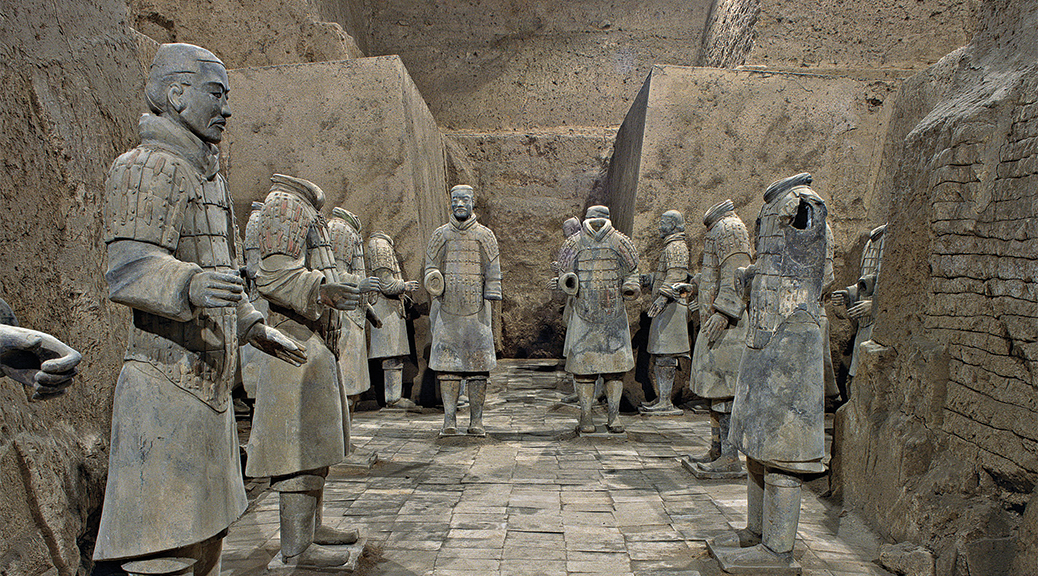
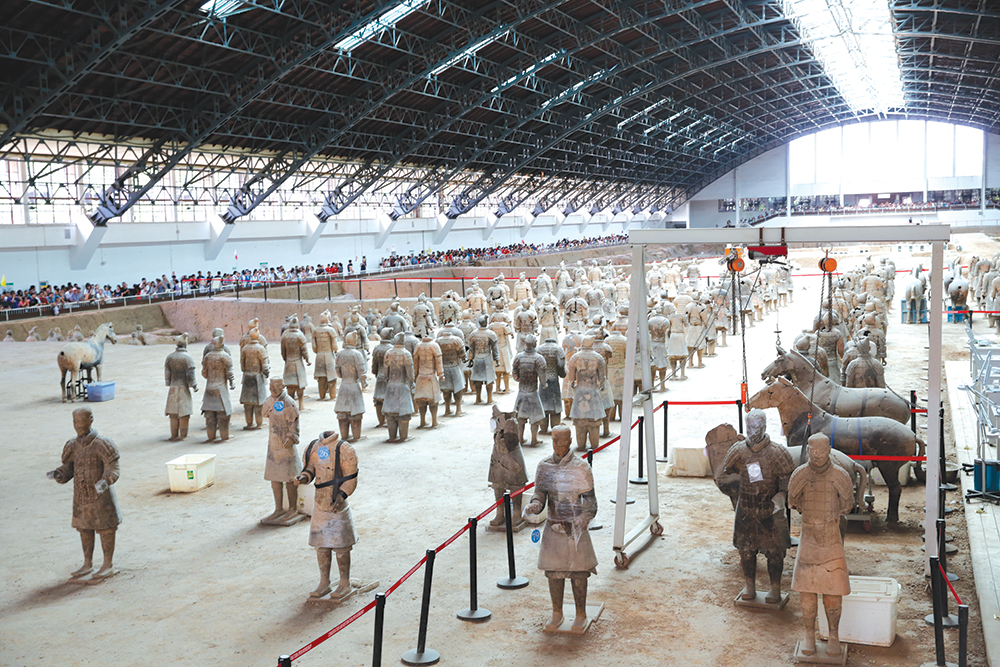
The Terracotta Army Qin dynasty (221-206 BCE) (detail) Earthenware (terracotta) Emperor Qin Shihuang’s Mausoleum, Xi’an
The National Gallery of Victoria (NGV) presents the Melbourne Winter Masterpieces, featuring a dual presentation of past and present Chinese art and culture. Opening in May, this exhibition will bring forth this concept by exhibiting the world famous ancient Terracotta Warriors alongside a parallel display of new works by famous contemporary artist, Cai Guo-Qiang.
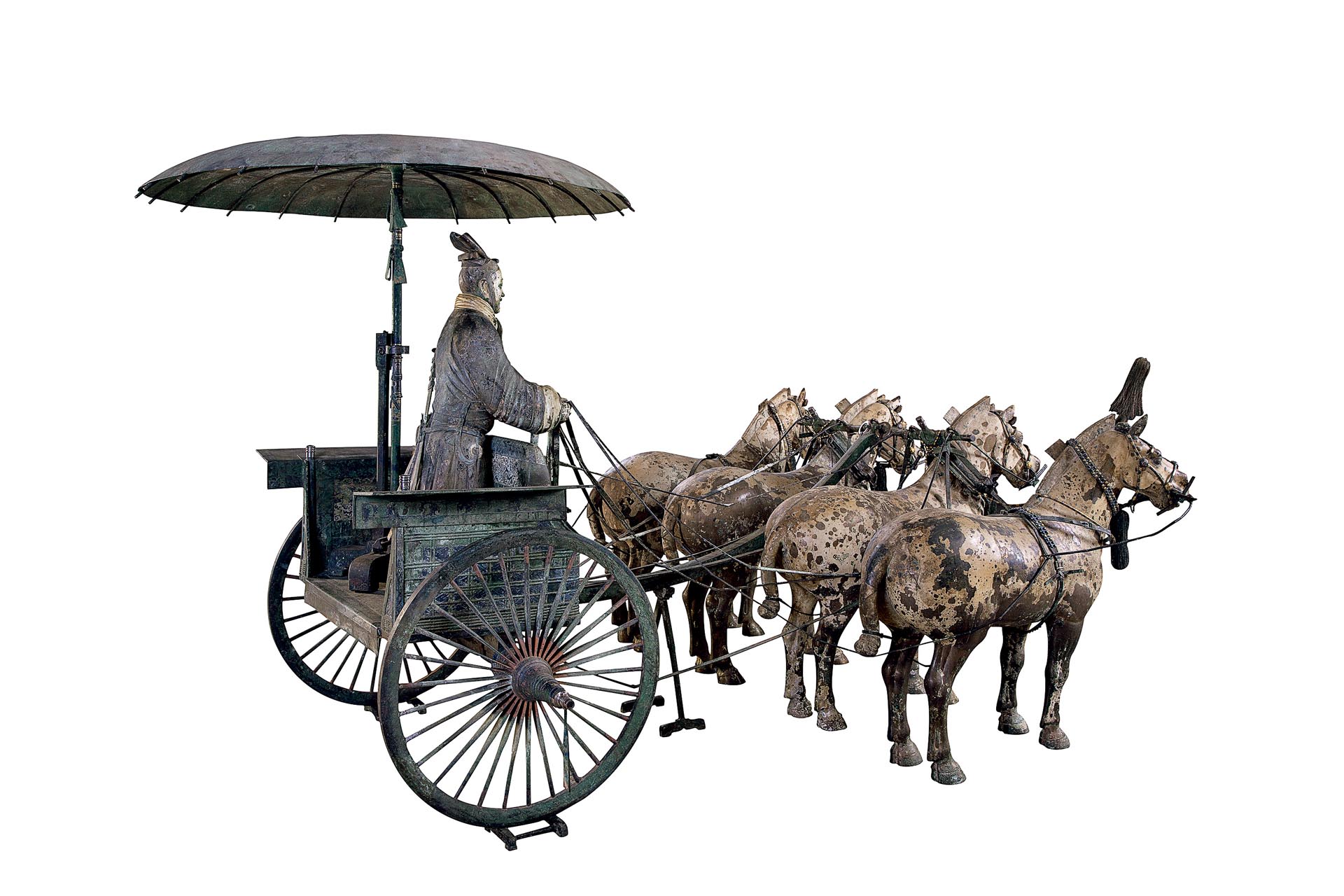
Chariot #1 (Qin Dynasty Replica) bronze 152.0 (h) x 225.0 cm Emperor Qin Shihuang’s Mausoleum Site Museum, Xi’an (MMYL007)
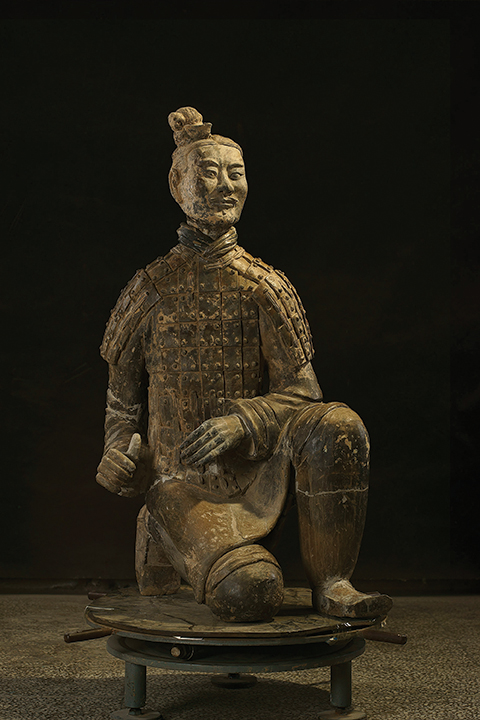
The Terracotta Warriors are known as the guardians of immortality and the eighth wonder of the world. This exhibition will feature eight warrior figures and two life-size horses from the Imperial Army, as well as two half-size replica bronze chariots, each drawn by four horses. ‘The Transient Landscape’ by Cai Guo-Qiang on the other hand will see new art works inspired by his home country’s culture and its enduring philosophical traditions, including a monumental installation of 10,000 suspended porcelain birds.
Soldier on horseback Western Han Dynasty 206 BCE –25 CE earthenware 68.0 (h) x 63.0 cm Xianyang Museum, Xianyang (YQD014)
Formerly known as Chang’an, Xi’an is one important ancient city in the world that you absolutely must visit! It is now a popular tourist site because of its rich history and good food.
5 top places in Xi’an:
Emperor Qinshihuang’s Mausoleum Site Museum Listed as a world UNESCO heritage site, the Emperor Qinshihuang’s Mausoleum Site Museum located in the Lintong District is the tomb of the first emperor of China, Qin Shi Huang. It also holds the world famous Terracotta Army.
Bell Tower Built in the early Ming Dynasty, the Bell Tower of Xi’an is located right at the centre of the city and is an important landmark of Xi’an. It is one of its finest kind in China.
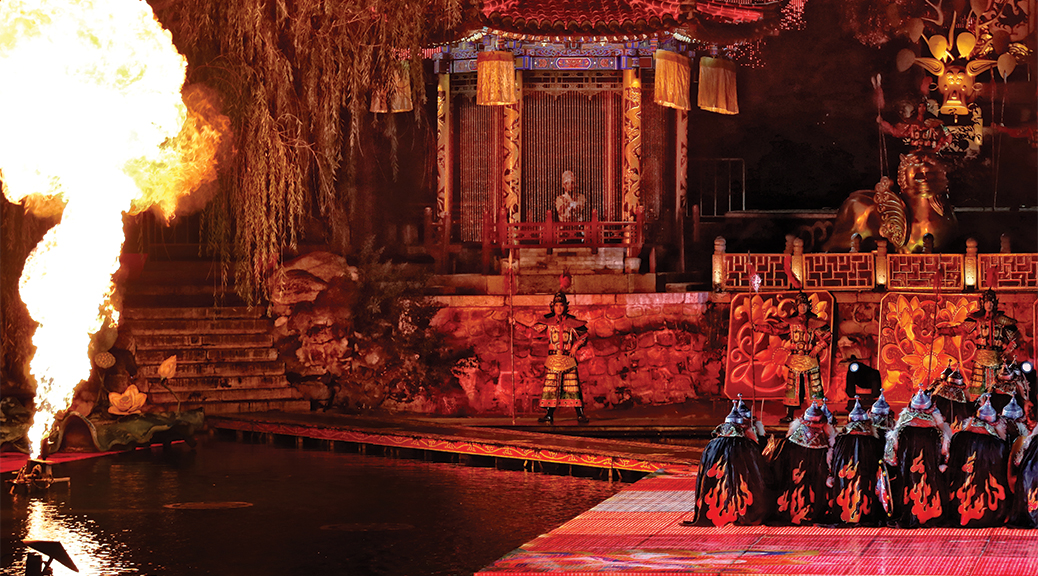
Famen Temple Cultural Scenic Area Known as the second cultural symbol of Shaanxi, the Famen Temple Cultural Scenic Area is renowned for storing the Finger Bone of the Sakyamuni Buddha. One of its sectors, the Namaste Dagoba, has a fascinating theatre performance of the history of Famen Temple you should not miss!
Qianling Mausoleum The Qianling Mausoleum is where tombs of the imperial family of the Tang Dynasty are located. This includes the tombs of the famous Emperor Tang Gaozong and his wife, Emperor Wu Zetian, the only female Emperor to ever rule in China.
Muslim Quarter Rich in culture and it’s abundance of delicious food, the Muslim Quarter not only enclaves the majority of the Muslim population of Xi’an, but has also turned into one of the most visited tourist spots in the district!
5 top dishes in Xi’an:
Biang Biang noodles Savoury and chewy in taste, the classic Biang Biang noodles made from wheat flour are served with vinegar and topped with assorted vegetables and braised meats. ‘Biang’ describes the sound made when the noodle dough is slapped against the working surface repeatedly.
Liang Pi (凉皮) Made from wheat or rice flour, Liang Pi (Cold Skin Noodles) is a local snack where cold thinly sliced rice noodles are drizzled with chilli oil sauce and topped with spices and vegetables. It is a yummy vegan dish!
Rou Jia Mo(肉夹馍) Invented in the Qin Dynasty, Rio Jia Mo is the oldest hamburger in the world, It is a crispy handmade bread with tender stewed fatty pork patty stuffed in the middle! Other meat alternatives are also available.
Yang Rou Pao Mo(羊肉泡馍) Yang Rou Pao Mo is a dish where hand-pulled flatbread crumbles are cooked in a flavourful mutton broth with rice vermicelli and topped with slices of lamb or beef of your choice and pickled sweet garlic. Hand-pulling the flatbread is also a time to gossip and socialize for locals!
Suan Tang Shui Jiao (酸汤水饺) Suan Tang Shui Jiao with locally made mutton dumplings are boiled in a mouth-watering hot and sour soup. Every dumpling is an explosion of flavour! Sesame seeds, chopped leeks and cilantro are added to make the dish pop!
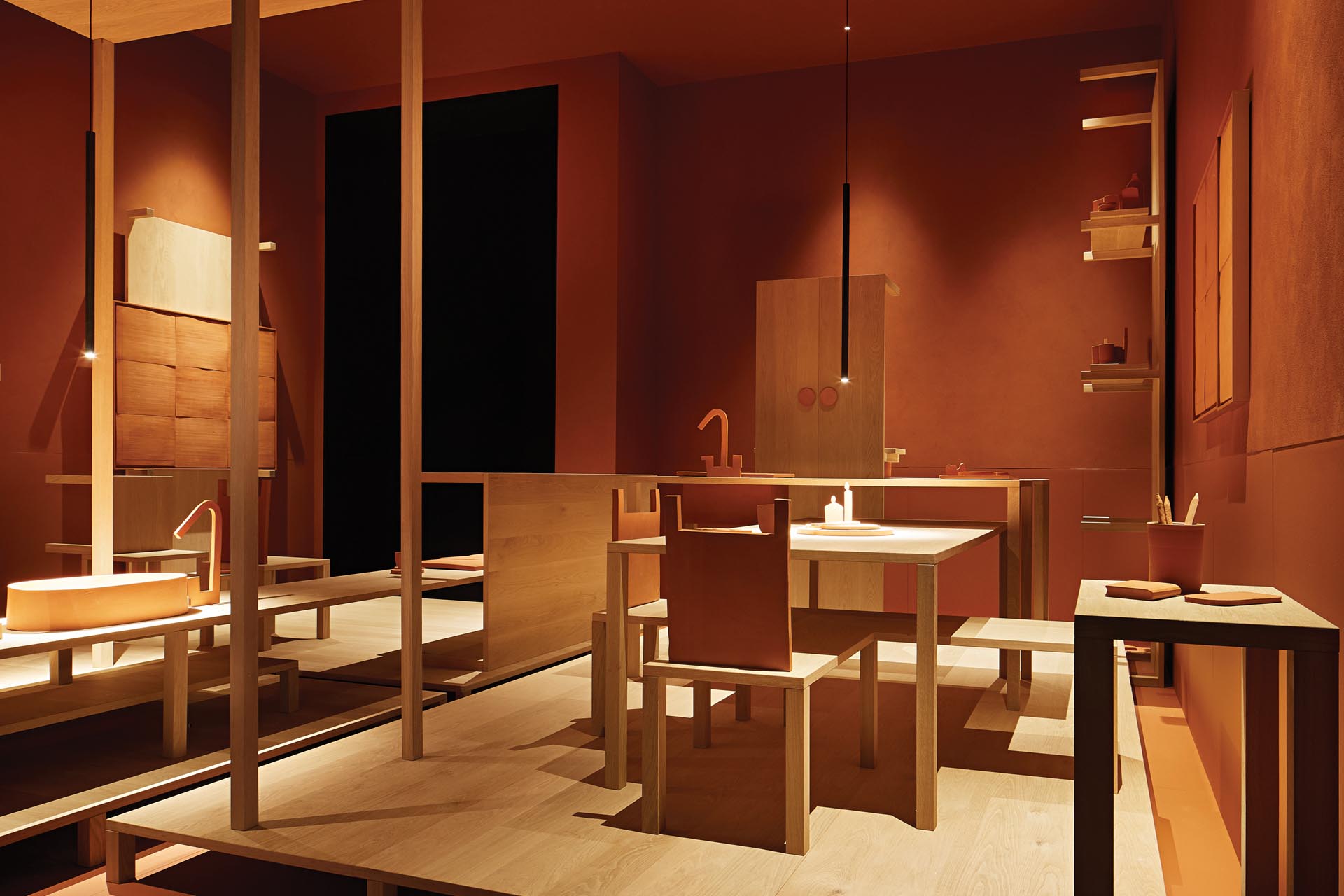
Installation view of The table is the base, 2018 Hecker Guthrie design studio Australia est. 2008
The Rigg Design Prize is the highest accolade for contemporary design in Australia. Hosted triennially, this prize reflects on the NGV’s dedication to the contemporary design and architectural scene in Australia. In 2018, this prestigious award was awarded to Hecker Guthrie, outstanding Melbourne design practice that has demonstrated excellence in creative achievement.
Installation view of Imaginarium, 2018 The Society Inc by Sibella Court design studio Australia est. 2009
Ten Australian design studios working in the interior design and decoration field were shortlisted for the Rigg Design Prize 2018 with the exhibition theme as Domestic Living. This required the ten entrants in the Rigg Design Prize 2018 to demonstrate in their interior work how interior design can transcend basic functionality to become a form of communication embedded with values, ideas, attitudes and narrative.
Installation view of Inner-Terior, 2018 Danielle Brustman design studio Australia est. 2012

 cm
cm






 EZ AUSTRALIA.NEWS