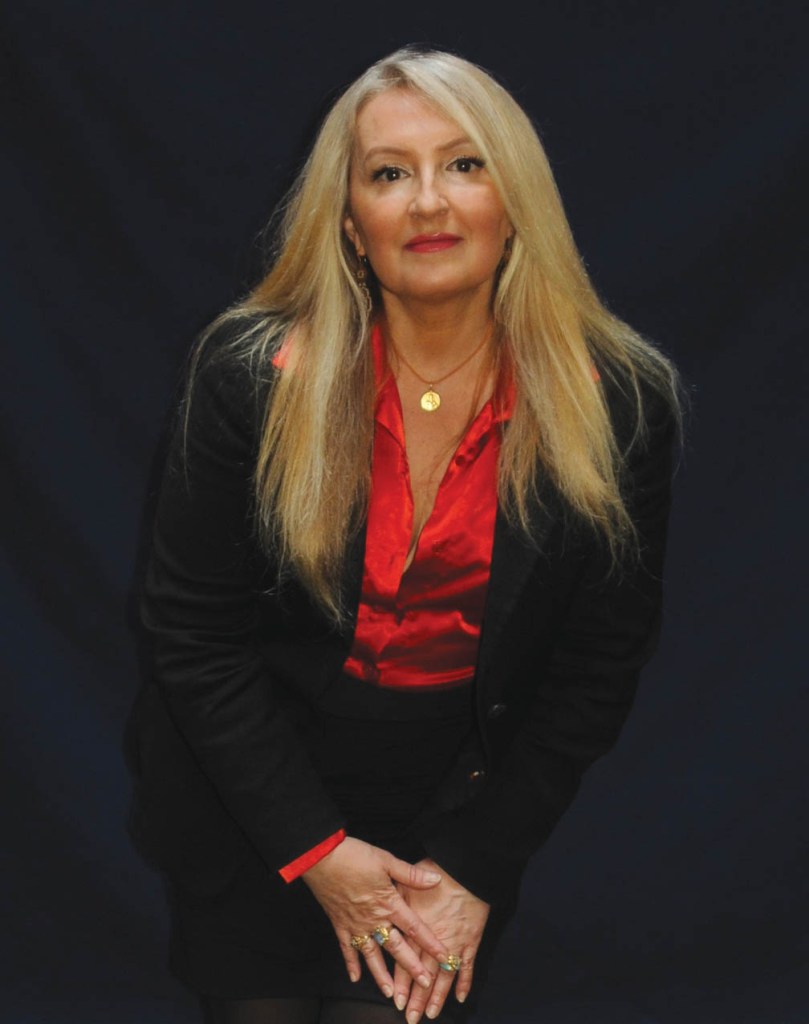
Founder of Melbourne Art Rooms (MARS) & Andy Dinan Art Consulting (ADA)
Melbourne Art Rooms (MARS) & Andy Dinan Art Consulting (ADA) 创始人
After forging her prestigious reputation as one of Australia’s most dynamic PR consultants in the 1990s, respected art entrepreneur turned culture consultant Andy Dinan seized an opportunity to integrate art into property developments by establishing Andy Dinan Art Consulting (ADA) in 2010 which operates under Melbourne Art Rooms (MARS) – established in 2004. MAR’s 15 years of involvement in the art community allows ADA to conduct quality art projects across all artistic disciplines through its kaleidoscope of local and international artists.
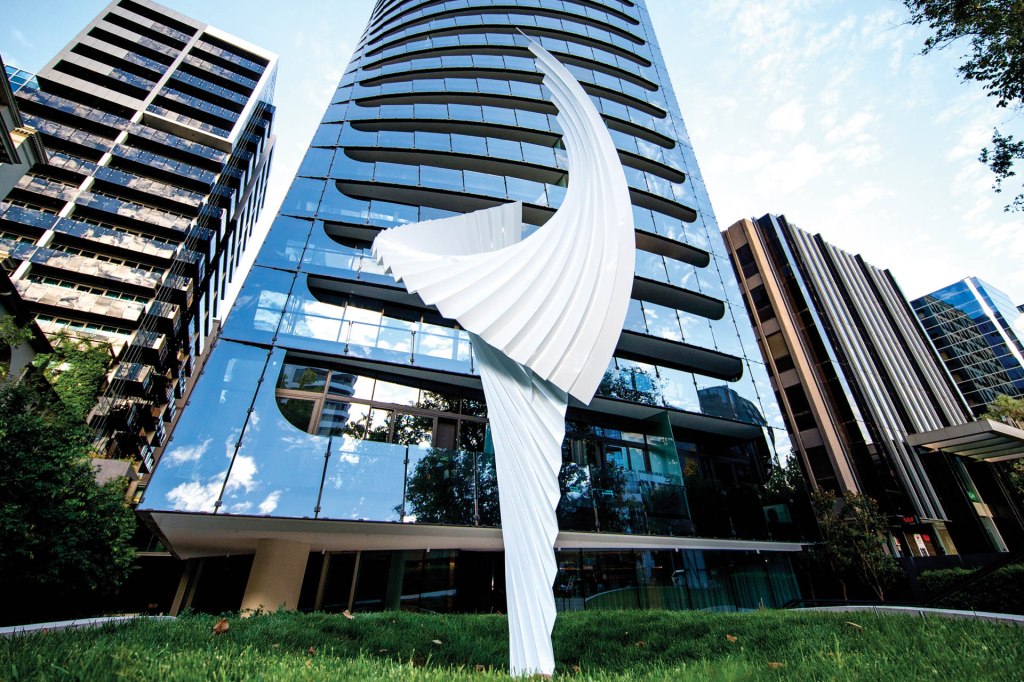
661 Chapel St Art Collection 2018 Sculpture by Matthew Harding, Fabrice Bigot, Jenny Crompton, Daniel Agdag, Simon Finn Architect: Bird De La CoeurOpera by Matthew Harding Sculpture | Matthew Harding (1964–2018) Fabricated | Robert Hook Commissioned | Golden Age and the Deague Group Delivered | ADA Consulting, March 2019 Photography | Fiona Hamilton, Courtesy ADA Consulting
Andy’s passion for helping others allows her to use MARS to help artists commercialise their work to the public domain. On top of being chosen as one of 100 Women of Influence in the Australian Financial Review and Westpac 100 Women of Influence Awards, Andy has been a foundation board member of the Victorian Arts Centre in Melbourne since 2017 and Chairs the annual Ovation fundraising dinner to be held on stage at Sydney Myer Music Bowl .
EBV Renders EBV Renders
Located in their purpose-built, state-of-the-art gallery in Windsor, Melbourne; ADA is dedicated to delivering strategies to incorporate public art into residential, commercial and retail developments whilst also creating a sense of “home” for the community.
Since its inception, ADA has successfully implemented an extensive number of public art commissions, art projects and pop up events worth over a million dollars across Melbourne for renowned property developer clients including Gamuda Land, Golden Age & the Deague Group, Michael Yates & Co and Piccolo Developments etc.
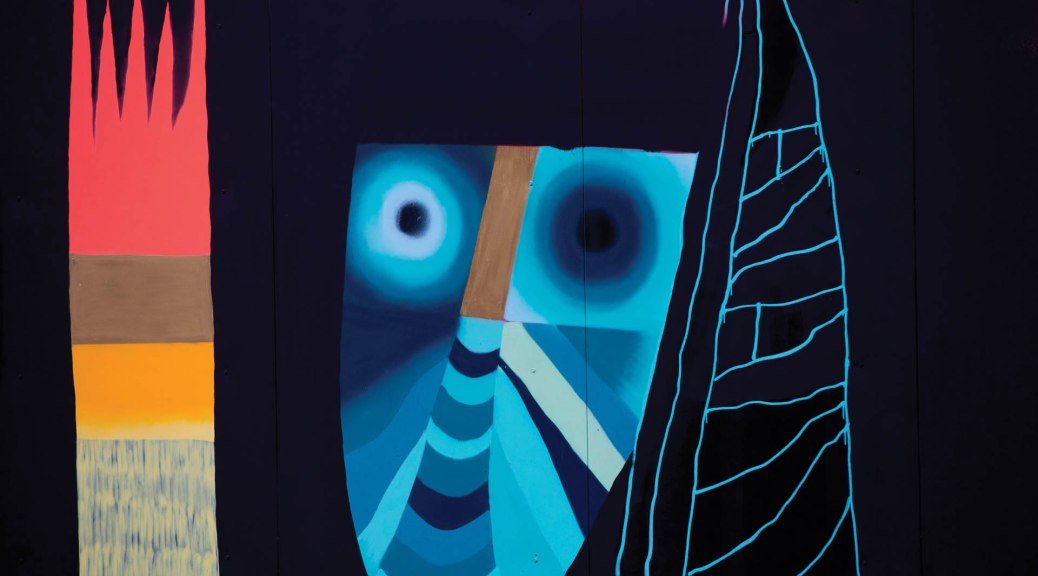
Recently, ADA was engaged by the Banco Group and commissioned artist Al Stark to paint a mural on the hoarding which would be erected around the construction site of East Brunswick Village (EBV).
When asked about what inspired his mural, Stark wanted to evoke contemporary cave painting that is alluring to people regardless of its form , colour and rhythm.
“The mural has landmarked the site and put it in people’s consciousness; eventually, it’s going to be a permanent part of the public art collection at EBV,” said Stark.
The EBV Hoarding mural represents Stage 1 of a 6 stage Public Art Strategy for East Brunswick Village, to be implemented by ADA Consulting over the next two years.
EBV – Com Collective I Ceramic collectiveEBV – Com Collective I Lucile Sciallano
Sustainability, comfort, creativity and most importantly, community, are the central values in Banco Group’s vision for EBV. The completed village will feature a curated retail hub, restaurant alley, wellness hub and much more, that will be available for both EBV’s residents and the community.
For further information please visit:
andydinanartconsulting.com.au / marsgallery.com.au or contact us at andy@marsgallery.com.au
MARS Gallery- Lars Breuer I To The Happy FewMARS Gallery- External Neon *
作为1990年代澳大利亚著名且最有活力的公关顾问之一,同时也是备受尊敬的艺术企业家转型为文化顾问,Andy Dinan通过其设立的艺术咨询机构-Andy Dinan Art Consulting (ADA)抓住了艺术融入房产开发的契机。这也是她在2004年所创立的墨尔本艺术空间-Melbourne Art Rooms (MARS)属下运营机构。透过MARS在艺术领域长达15年的参与度,ADA将以本地和国际艺术家组成强力的艺术万花筒,在相关领域开展高质量的艺术项目计划。
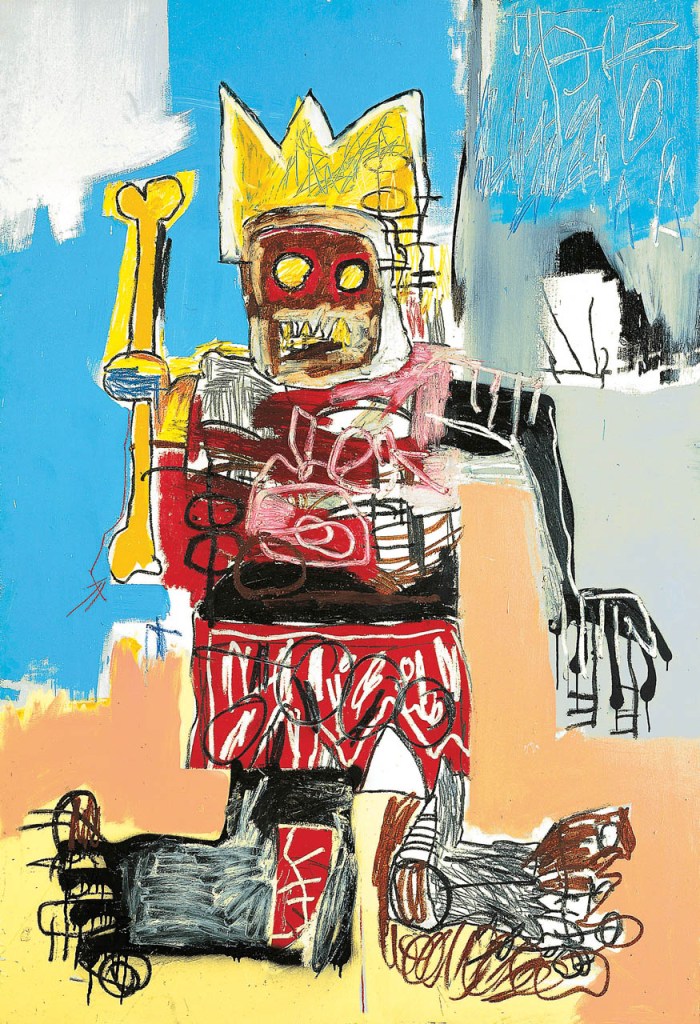
In an unprecedented, world premiere exhibition, the National Gallery of Victoria presents the work of two of the most significant and influential artists of the late twentieth century in Keith Haring | Jean-Michel Basquiat: Crossing Lines. Exclusive to Melbourne, the exhibition offers new and fascinating insights into their unique visual languages and reveals, for the first time, the many intersections between their lives, practices and ideas.
Keith Haring (American 1958–90) and Jean-Michel Basquiat (American 1960–88) changed the art world of the 1980s through their idiosyncratic imagery, radical ideas and complex socio-political commentary, creating an indelible legacy that continues to influence contemporary visual and popular culture today. Each artist is acclaimed for his distinctive visual language, employing signs, symbols and words to convey strong social and political messages in unconventional ways.
The exhibition surveys each artist’s tragically short, yet prolific career through more than 300 artworks, including works created in public spaces, painting, sculpture, objects, works on paper, photographs and more. Crossing Lines provides local and international audiences with a comprehensive insight into each of these influential artists, as well as an understanding of their broader impact, both in the 80s and 90s and continuing today.
Beginning with examples of both artist’s work from the streets and subway stations of New York City, the exhibition presents works from each artist’s first exhibitions, their collaborations with each other, as well as with the likes of Andy Warhol, Grace Jones and Madonna. It continues by presenting some of their most acclaimed artworks, including pieces featuring Basquiat’s crown and head motifs and Haring’s iconic ‘radiant baby’ and dancing figures.
Curated for the NGV by Dr Dieter Buchhart, art historian and curator of recent monographic exhibitions on both Jean-Michel Basquiat (Fondation Louis Vuitton, Barbican art Gallery) and Keith Haring (Musée d’Art Moderne de la Ville de Paris).
The Shroud of Turin is the most venerated and controversial religious icon in the world. It has been at the centre of a quest for truth since the turn of the 20th century if not longer, its origin the subject of intense debate among historians and scientists.
The Shroud has also stood as a cardinal model for the representation of Jesus Christ in art for millennia. Most recently as the subject of a series of art works by leading Italian artist Veronica Piraccini, whose work will be exhibited later this year at SpACE@Collins gallery in Melbourne.
What is the Shroud of Turin?
A shroud is a large linen cloth used for wrapping a dead body in preparation for burial. What is called the Shroud of Turin is therefore a particular burial cloth located in the Italian city of Turin that many of the Christian faith believe was used to wrap the body of Jesus of Nazareth after his death by crucifixion. It was brought over from France by the Royal House of Savoy in 1578 and has been housed at Turin’s Cathedral of St John the Baptist ever since. The phenomenal aspect of the Shroud is that it contains a vague image of a crucified man which corresponds exactly to how Jesus was crucified as described in the Gospel According to John of the New Testament Bible.
Why the Controversy?
While many accept the Shroud to be the authentic burial cloth of Jesus dating from 33 AD, the other most common belief is that, based on historical and scientific research, the Shroud of Turin is a forgery made in northern France after 1260 AD. There is scant historical evidence of the Shroud’s existence prior to this date. Many historians contend that it was in the possession of a French Knight, Geoffroi de Charny from 1353, and was put on display in the French town of Lirey in 1356, the same year of de Charny’s death at the battle of Poitiers.
The controversy began in 1390 when the Bishop of Lirey, Pierre d’Arcis, wrote to Pope Clement VII claiming that an artist had confessed to making a forgery. But this claim has never dissuaded the faithful from believing that the Shroud is the authentic burial cloth of Jesus Christ. Although modern scientific techniques, especially carbon-14 dating, applied to samples of the cloth determined that the age of Shroud falls within dates closely corresponding to its first documented appearance in Lirey in 1353, other scientific analyses have found no artificial pigments, paints, dyes or stains, or even scorch marks, to verify that it is indeed a forgery.
Regardless of whether is it or isn’t the actual burial cloth of Jesus Christ, and though the image is anatomically correct, suggesting that it is the result of contact with a human corpse, how the image of a naked crucified man was produced on the Shroud remains a mystery.
The Holy Shroud as Iconography
To this day modern science has been unable to dismiss the Shroud as a forgery or proved that it is authentic. Similarly the Vatican has neither officially denied nor claimed the Shroud to be physical proof of the crucifixion, death and resurrection of Jesus Christ.
But there is another truth that exists in between—the truth of art. In 4th century Rome, Christians were permitted freedom of worship because Constantine the Great, who reigned between 306 and 337 AD, became the first Roman emperor to convert to Christianity. Christians were able to create art that depicted Jesus their Lord and Savior without fear of persecution.
The remarkable aspect of ancient paintings and other works of art is the uncanny resemblance to the face of the crucified man impressed upon the Shroud. This suggests that the Shroud must have been in existence by about the 4th century. The language of art is often more precise than mathematics and visibly unambiguous, thus over the centuries, from the time of Constantine I right up until today, the Holy Shroud has been a inspiring model for the visual representation of Jesus Christ.
At the Intersection of Faith, Science and Art
On 28 May 1898, an amateur photographer by the name of Seconda Pia took the first ever photograph of the Shroud of Turin, and when developing the negative discovered to his amazement that it showed a higher resolution image of a man’s face. For Pia this meant the Shroud could not be a painting since artists cannot accurately paint a negative image. His discovery initiated the field of modern sindonology, the formal study of the Shroud of Turin.
The remarkable achievement of the artwork by Veronica Piraccini is that it continues in the same spirit as Pia’s—her work stands at the intersection of faith, science and art. In April 2012, she received a life-size photographic scan of the Shroud of Turin, delivered to her studio in Rome by Capuchin Monks. It was the culmination of a dream come true for this artist, who has always been attracted by the Shroud of Turin in the same way that it has fascinated theologians, historians, scientists and countless other artists throughout the ages.
Piraccini began a series of artworks that would combine ancient and innovative techniques. She set to work on first producing a mirror image of the impression of the crucified man, one that would faithfully reflect the sanctity of the relic. Using pastels on transparent paper, she traced precisely what was on the photographic scan, then reversed the paper and reproduced the image on canvas. This ‘mirroring’ process is similar to a method that goes back to the 6th century, which was applied to religious icons in order to retain the sacredness of the original.
From this was born Piraccini’s finest achievement, From the Imprint Jesus. Back in the 1980s, she discovered new pigments that she calls ‘imperceptible’ — that is, invisible to the naked eye in natural light but are made visible only when a black light (or ultraviolet light) is cast on to the canvas. She applied a blue pigment to highlight the blows and bruises inflicted on the body of ‘Jesus’ and a red pigment to highlight the wounds caused by the crown of thorns on the head, the nails on the hands and feet, and the lance in the side of his body. Thanks to the black light, her life-size painting of a crucified man suddenly takes spectacular form in gorgeous irisdescent colours.
Piraccini’s works, which have been exhibited in countless galleries across Italy and abroad since 2013, are described as a miracle of art and alchemy, arousing great emotional responses from its viewers and always re-igniting the age-old controversy surrounding the Shroud of Turin.
Nixora Group and the Global Association of International Artists (GAIA) will host a ten-day exhibition titled The Holy Shroud at Melbourne’s prestigious SpACE@Collins gallery from 15 to 24 November 2019.
Nixora Group is a consulting firm that supports financial institutions and large corporations with state-of-the-art risk management, analytics and data intelligence services.
GAIA – Global Association of International Artists is a not-for-profit organisation that supports the international exchange of figurative artists and promotes social cohesion.
为何出现争议? 尽管许多人认为这块裹尸布是公元33年耶稣的葬布真迹,但另一个最普遍的看法是:根据历史和科学研究查证,都灵裹尸布是公元1260年后法国北部制作的伪造品。在此之前,几乎没有相关裹尸布存在过的历史依据。很多历史学家表示,它是由一位法国骑士Geoffroi de Charny于1353年拥有的,并于1356年在法国的Lirey市展出,同年这位骑士在普瓦捷斯战役中阵亡。
而这场争论始于1390年,当时Lirey的主教Pierre d ‘Arcis写信给教皇Pope Clement VII,声称一位艺术家承认伪造艺术品。不过,这些说法从未制止信徒们对裹尸布是耶稣基督葬礼用布的事实深信不疑。即使透过现代科学技术的鉴定,尤其是将碳-14法测定应用于布料以确定样本的年限,裹尸布对应时间线为1353年,非常切合首次出现在Lirey的文件记录时间。但其他科学分析未有发现人工颜料、油漆、染料或污渍,甚至烧焦痕迹,所以无法验证它是伪造的。
Nixora Group和全球国际艺术家协会(Global Association of International Artists – GAIA) 将于2019年11月15日至24日在墨尔本著名的 SpACE@
Collins画廊举办为期10天的 “神圣裹尸布-The Holy Shroud”展览会。








 EZ AUSTRALIA.NEWS